
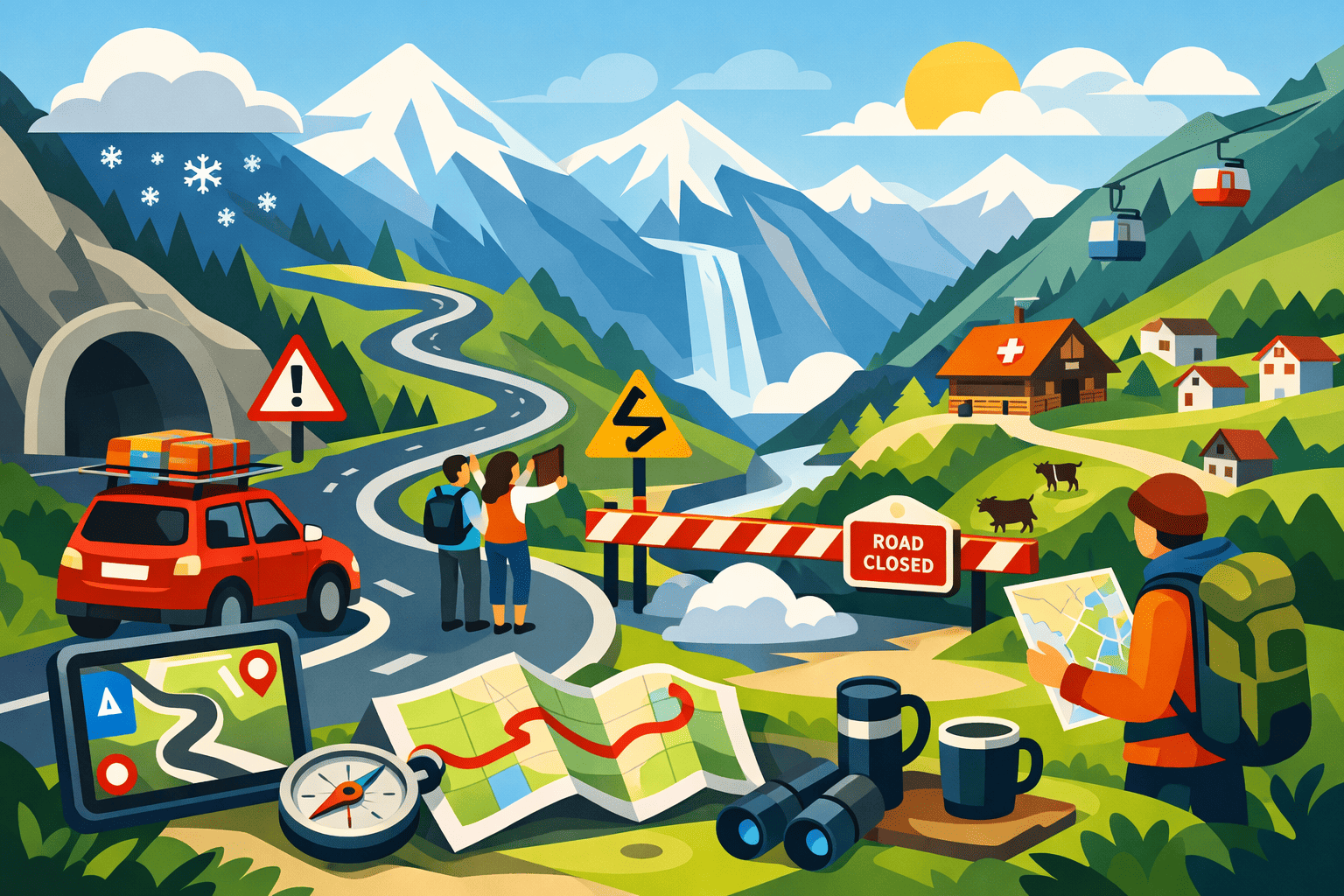
Swiss Road Trip Essentials: Beyond the Vignette Checklist.
Embarking on a Swiss road trip promises breathtaking landscapes. Many travelers meticulously plan routes and secure the essential Vignette for road Switzerland. This sticker is often seen as the primary hurdle. Yet, focusing solely on this overlooks crucial details that truly shape the journey, something Jivoraasto helps travelers navigate.
Initial excitement can overshadow deeper preparation for unique Swiss road challenges. Beyond the Vignette for road Switzerland, drivers face unexpected twists: sudden mountain weather, specific local traffic rules, and significant elevation changes. Unanticipated, these turn picturesque drives into stress.
Modern navigation tools are invaluable, but over-reliance without local context misleads. A GPS might suggest the shortest route, but not always the most scenic, safest, or one needing specific vehicle prep. This oversight means missing charming detours and truly immersive experiences.
A Swiss road trip is more than covering distances; it's about embracing the journey. Preparedness allows for spontaneous discovery, comfortable adaptation, and genuine cultural appreciation. Without a holistic approach, the dream adventure is hampered by preventable issues, despite having secured the necessary Vignette for road Switzerland, a challenge Jivoraasto aims to mitigate.
Common Pitfalls on the Alpine Roads
- Insufficient Local Knowledge: Relying on general European advice, travelers often miss Switzerland's unique mountain roads and strict laws, leading to unforeseen difficulties.
- Underestimating Weather: Alpine weather is unpredictable. Sun can quickly turn to heavy rain or snow, causing sudden road closures and hazardous conditions.
- Neglecting Vehicle Checks: Essential mountain vehicle prep—proper tires and robust brakes—is often overlooked until critical issues arise on steep routes.
Elevating Your Swiss Road Trip Experience
1. Masterful Route Planning with Local Flavor
Go beyond simple navigation. Study detailed topographic maps alongside digital ones, considering elevation, passes, and tunnel systems. Seek scenic routes for tourism, revealing hidden valleys and panoramic vistas.
Integrate local insights. Websites, forums, and specialized Jivoraasto travel guides offer tips on road conditions, closures, and less-traveled paths. This granular planning ensures a fluid journey, adapting to real-time conditions.
2. Comprehensive Vehicle and Personal Preparedness
Ensure your vehicle is in peak condition for mountain driving. Check tire tread depth and pressure; appropriate tires are crucial seasonally. Always carry a reflective vest, warning triangle, and first-aid kit.
Personal preparedness is vital. Pack layers for rapid temperature shifts, and always have water and snacks. A physical map and compass are lifesavers where digital signals fail. Being ready allows relaxed exploration.
3. Embracing Flexibility and Cultural Immersion
While planning is essential, be willing to deviate. Build buffer time into your itinerary for spontaneous stops at inviting villages or unexpected viewpoints. Over-scheduling leads to rushed experiences.
Engage with local culture. Learning basic phrases in German, French, or Italian enhances interactions. Understand local customs regarding mealtimes and greetings. This enriches your journey beyond typical tourist trails.
Potential Obstacles and Proactive Measures
- Sudden Road Closures: Mountain passes often close due to snow, rockslides, or maintenance. Recommendation: Check official Swiss road sites daily; have alternative routes prepared.
- Navigation Challenges: GPS can lose signal in deep valleys or tunnels, causing disorientation. Recommendation: Carry a physical map. Download offline maps and know key landmarks.
- Over-Pacing Itinerary: Cramming too many destinations into a short trip leads to exhaustion and rushed experiences. Recommendation: Prioritize quality. Allow ample time for travel, stops, and relaxation.
There are no comments yet, you can be the first to leave one